
Chapter 5.2
Quite Likable

Originally, before the paint chipped and faded away, they were yellow, medium yellow, the cheapest color available at the time of construction. For this reason are the buildings called Honeycombs. For this reason, and on account of their unrelenting repetitive geometry. Each stack of flats is pocked with thousands of horrid and bewildering and inexplicably hexagonal window divots, each of which is eerie on its own and all of which work together to make you feel when you look at them the beginnings of genuine dizziness. Between the buildings run small pedestrian lanes lined with the same set of shops, over and again: vegetables, shoes, haircuts, laundry, fish, writing supplies, vegetables, shoes, and so on, essentially. We were traveling on the six-lane road that bisects the mess into Honeycombs East and Honeycombs West, and once past the retaining wall the car came into soulless view of a parade of commercial strips, long and flat and terribly American, parking lots constellated with hundreds of suns, each reflected in the steel and chrome of automobiles.
Before very long, I think, I am going to be telling you that the President is immune to sadness. When I do, you should be skeptical. There is evidence here and there to suggest that he is not completely stone, and an example is the Honeycombs. On his weakest days they have, the sight of them has, the power to push the poor man probably forty-five percent of the way to weeping. It is the same story as in the financial district, basically: if it were not for his love of the Turnpike that lies beyond it, we would never pass through this part of town. And you have to understand. It isn’t just ugliness. It isn’t just architecture gone wrong. It is history and memory, too. The Honeycombs, the whole square mile of it, went up at another kind of time.
It was an era when the President was fairly new to power and still susceptible to ideas such as this: that if a gargantuan concatenation of gravestone apartments were erected and populated at no charge to the incoming residents, it might be possible to drain the Flats beyond the city limits of their thick and miserable hordes. It might be possible, it was thought, it was dreamed, to draw the hungry and the rained-upon through the fences and into a governed part of the earth. It might be possible to establish them, to support them, to make their lives a real and countable part, an actual part, of the life and commerce and plumbing of the capital. And? For reasons about which your Ivy experts are fond of writing papers, this did not work out. What we got instead was what we have now: the Honeycombs are full to bursting and the Flats is as bad as it ever was. Palatiparvu’s two inexhaustible resources are pain and people to suffer it.
The Honeycombs, then, represent failure and pasts disastrous, futures that will never be. They represent the opposite of the enterprising and rewarded cheek of the little girl with the Fanta. They represent the necessity of asking questions like these: what good, after all, had the President really done her? Had the incident been quite so encouraging as we’d been inclined to believe? What was the President going to do? Drive through the city giving all the little barefoot children Palatiparvitsi to hide in their mouths? Obviously not. These were the disappointments into which the Honeycombs plunged us, that day, in the car. They were the things that I began to think about, anyway. And the President did, too. I could see it in the set of his chin.
The question becomes, therefore: should we suspect, on account of what he said next, that Bradley Washington might actually be a sociopath? I must note — and you may already know this — that we do not exactly have a concept, the concept, of sociopathy, in the diagnostic or philosophical traditions of Palatiparvu. Societies themselves are pathological: that is the way we have tended to see the matter for centuries. To be a sociopath is rather a healthy thing! In a certain understated sense, it is, is our view. For sure, we would have treated Rousseau better than the Parisians did. Point being: it is tricky and international, the question of why, exactly, having already just said a stupid and unlovely thing, Bradley Washington then pressed his bet and said another. Why? I can really only guess. But he definitely did do it. He definitely did turn away from the Honeycomb shopping strips; he definitely did look at his father; he definitely did bring up American politics.
Now, on the one hand, it is not impossible, not entirely, to imagine that the young man might have thought that this would be a helpful and peace-making topic. Not impossible at all, when you consider Bradley Washington’s particular mental–social shortcomings. I’m sorry I said something so thoughtless, before: it’s conceivable that a sentiment like this is what he meant to communicate when he said what he said about Senator Stoneman of Nebraska. He knows, after all, that our President finds your country’s politics fascinating. He knows that his father is on almost any ordinary occasion thrilled to discuss them. At the same time. We must wonder. Is it really very likely that the boy had no inkling of the crisis he was about to cause in that limousine? Was he really completely unable to imagine what might be the catastrophic result of mentioning the American presidency, the greatest of the world’s political prizes, when we were right in the middle of the Honeycombs? Our President’s worst — the title is arguable, but still — failure?
It was not the time for talk like this. It was the time for someone to say something about the weather. Or maybe about the dinner the night before with the Nigerian delegation. About how taxing such affairs can be. About how taxing it has been, too, for the President to sort through tranche after tranche of bean farmers. But no one had the opportunity to commiserate with the President about such things. Bradley Washington had begun to speak.
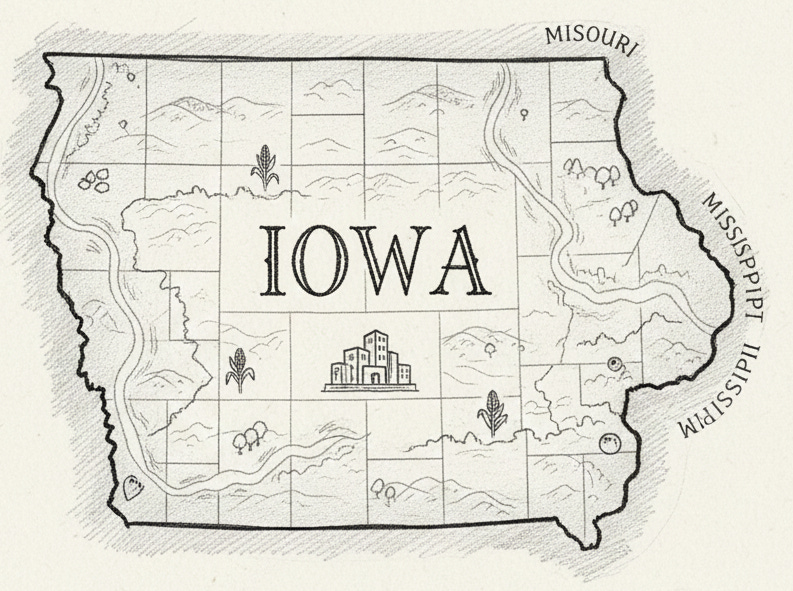
“I saw,” he said, floating the words heedlessly out into the silence, “that Senator Stoneman is rising in the Iowa polls. Apparently he’s quite likable.”
Palatiparvu’s two inexhaustible resources are pain and people to suffer it.
I need to hear this read. You’ve written one long excellent monologue for an actor with a perfect voice. The pauses even. You punctuate like musical notation.