
Chapter 7.1
The Great Salt Carotid

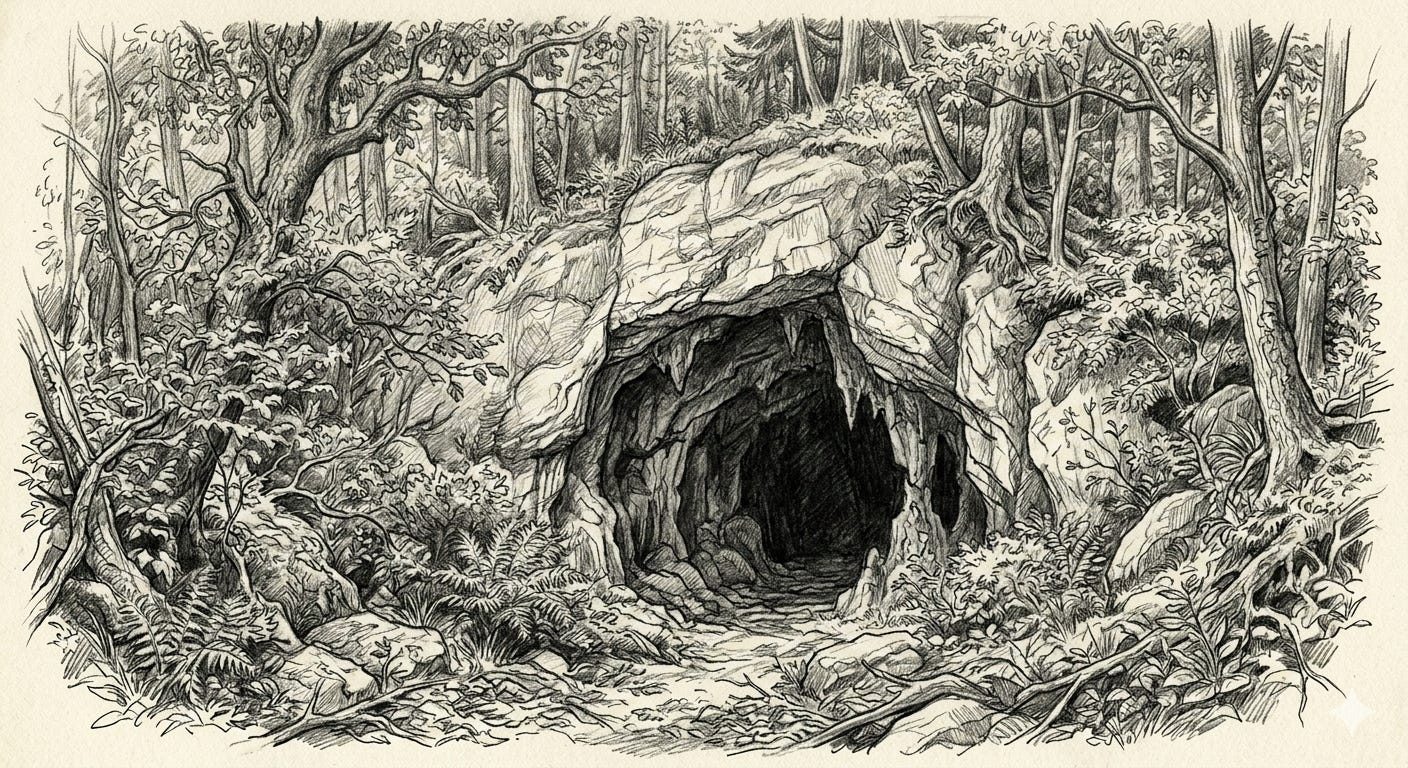
It is said, of course, Langley, that in the matter of the ancient mosaics on the walls of the National Cave — it is said that when it comes to these treasures we Palatiparvanians are a wretchedly dishonest lot. Of those of us in the regime, specifically, this is said. The “regime,” as you like to call it. For, yes, I have read the articles. You think we don’t know about The New Yorker over here, but we do. And let me say: we take offense. Nobody likes being called a liar, Langley. Nobody likes being called stupid. And that, exactly that — a junta of dissembling morons — is what, and I will explain how, you are calling us, when you agree with one another archly that it is all very surprising and convenient. Odd, you say, that the Cave’s genius mortared artifacts were discovered only after Independence, after the Non-Rectification, after the President accepted power. How curious that none of the French, English, Spanish, Dutch, Danes, Belgians, Russians, Turks, Japanese, Swedes, Portuguese, or Final Imperials — how curious that none of the powers who took their turns whipping my ancestors managed to locate the tiled wonders that now make every list of our country’s finest tourist draws. You ask, unpleasantly: did these colonials not investigate and excavate the cave at all? They did, Langley. How, then, to explain the fact that the mosaics were found only after our “regime” came into existence?
I answer this question with one of my own: exactly why is it my job to account for the pick-axe ineptitude of centuries of expatriate Dutchmen and Brits? And exactly what were we supposed to do, when we found the mosaics? Pretend that we hadn’t found them? Lest you accuse us of designing them, constructing them, sealing them in stone, waiting six months, and then feigning a grand discovery?
No, Langley. No. That is not the Palatiparvanian way. The Palatiparvanian way is to be proud of what has been, and of what is. And so I must insist that you set aside your suspicions. I can even help you to do so! It is simply a matter of logic. Put yourselves in our position: if you were -- for the sake, say, of national pride and tourism receipts – going to forge a series of gigantic and ancient motherland mosaics in the recesses of a cave, why would you exclude from those forgeries the image of that motherland’s most recognizable physical feature? It would make no sense to do this! It would be terrifically ineffective, artistically and fiscally. I can assure you: if we had faked the mosaics we would certainly have done so with the Carotid included. Therefore -- given that the Carotid is not included in the mosaics, and assuming that on the walls of the cave the Romans did represent the landscape as they found it -- what can we deduce? Other than that something geologically very strange has gone on in Palatiparvu over the last two thousand years? We can deduce that the treasures of the National Cave are authentic. Yes, my friends. They are real. They are definitely very real.
Now, I am not going to go so far, Langley, as to claim that the Great Salt Carotid is the “heart” of our country. That would not make any cultural or anatomical sense. The heart of our country is, very obviously, the site on which sit the National Ruins and the National Cave. But the Carotid is important! It is precisely our carotid. It connects our heart to our brain, our brain being Palatiparvopolis. The Carotid pumps life back and forth, north to south, past to present, from the sea to the hills. I have attempted to explain all of this to your courier, incidentally. That moron you’ve got hassling me with threats and requests and photographs of my daughter, every time I leave the Palace compound. This man, you ought to be aware, is the very opposite of discretion, and he is probably going to get us both killed, and my point right now is that when that day comes, when he and I are both strapped down and cut into pieces in the basement of the Palace, he will likely still not understand the importance of the Carotid to the soul of our little nation.
Perhaps you will not, either, Langley. I have the sense that for you the Carotid continues to be what it always was for the empires, the Imperials, the savages who brought us civilization: just a road. Just a topographical oddity. A bump in the countryside, a lump literally to be mined, here and there. But if you want to treat with our President, you need truly to see the land that he rules, and if that is what you want to see, you must imagine what is no longer there: a band of shipwrecked Romans, trekking north. The Carotid is the path that Tiro and his men took from the sea to the cave, to their redoubt, their safety, their commencement. All truths begin with that one, and some facts are beyond dispute. For one: over the course of the decades that followed the shipwreck, ancient Palatiparvu established its first highway along the path of Tiro’s journey. From just past the time of Christ the Carotid curves and straights have been known to constitute the quickest and safest and least thirsty itinerary across the manifold severities of the Palatiparvanian plain. The route makes every cut and swoop and slips through every northern pass you could ever hope for, and it’s not difficult to understand why the Romans, on their way to becoming Palatiparvanians, decided to lay their stones and cut their gutters along this lucky corridor.
What I’m willing to acknowledge, however, is that we are not quite able to explain why the earth beneath the Roman road rose, over the centuries, forty feet into the air. Taking the roadway with it. Four stories up. No. This, we cannot explain. We wish that we could, but we cannot, and there is no need here to belabor what you can easily read in the articles and abstracts and conference lecture-notes written by the experts who used to be allowed and willing to visit, namely, that nowhere in the world does there exist a landscape feature exactly like the Carotid: a bubbled–skyward and twisting earthen hump, long and laced at its apex with roadway, slithering over the landscape. On and on for two hundred miles! Nowhere else, I mean, does such a thing exist, without carrying inside itself some sign of having been built — by man, at or after the opening bell of civilization, or else by nature, millions of years before. It is a bizarre and unyielding reality, Langley, and the mosaics in the cave prove it: after the Roman arrival, but not necessarily because of it, the Carotid rousted itself unbidden.